

You’re not getting tackled because you’re slow. You’re getting tackled because you’re not gathering the right information before receiving the ball.
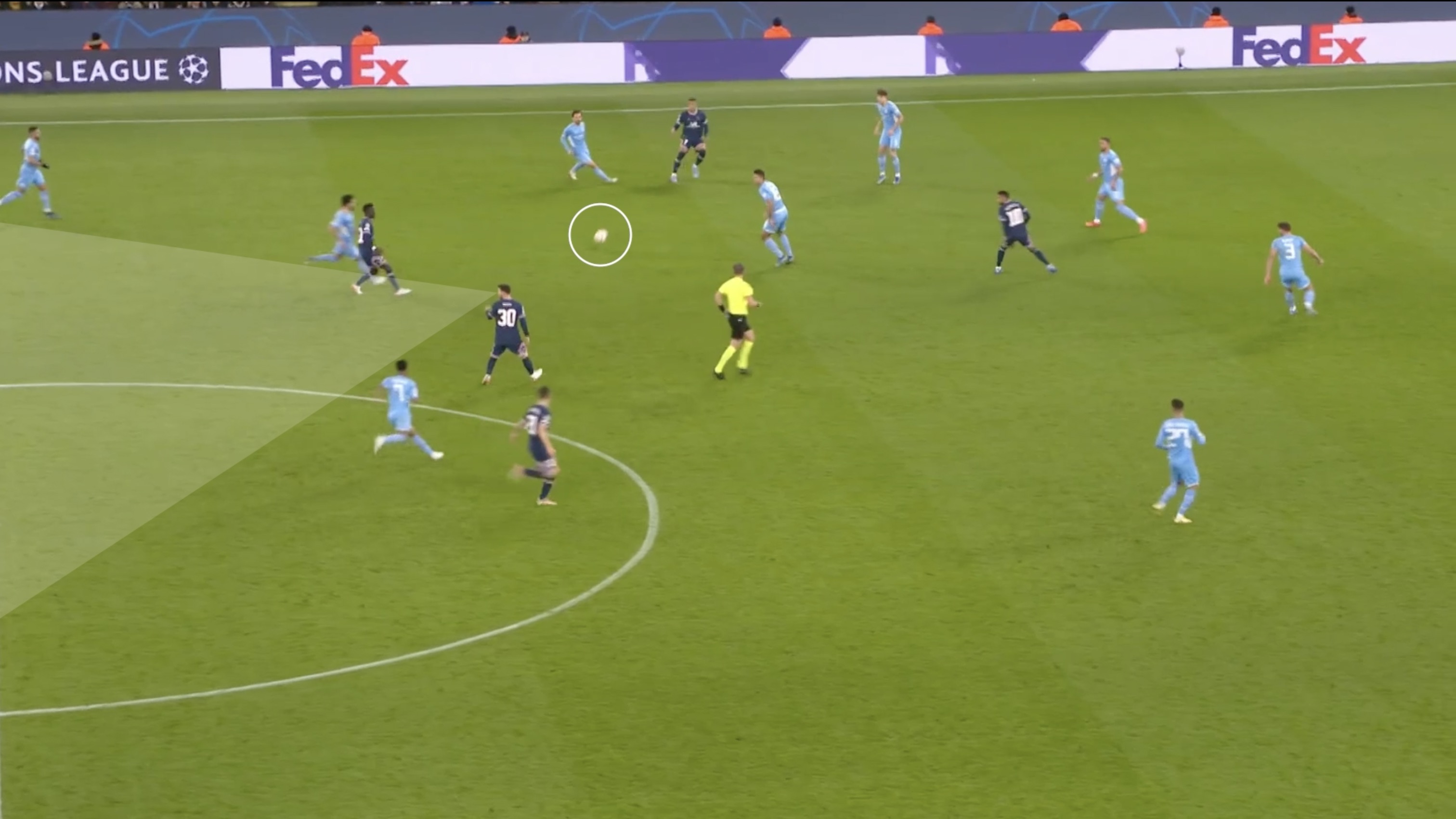
Imagine the ball coming toward you with defenders closing in. Most players hesitate and lose it. Elite footballers don’t. They scan the field while the ball is in motion, already knowing where teammates, opponents, and open space are. This pre-reception awareness gives them a split-second advantage.
Studies show that players who scan frequently and at the right moments make better decisions, execute more successful passes, and perform more effectively under pressure.
VR football training platforms like Be Your Best let players practise these visual scanning and decision-making skills in immersive scenarios, turning split-second awareness into measurable performance.
The principle is simple: extra time on the ball comes from seeing things sooner, not moving slower.
The Why: From Reactive to Proactive Play
Most football players operate reactively: they receive the ball, then look up to make a decision. Elite performers operate proactively. They scan the environment before receiving the football, so they already know where teammates, opponents, and open space are.
Research in football cognition supports this: players who train visual anticipation and scanning improve response accuracy and reduce decision times.
Be Your Best explicitly trains:
- Scan rate – how often a player visually scans the field
- Scan timing – when scans happen in relation to the ball
- Critical scans – the last glance before the ball arrives
These components are essential for strong football awareness.
.jpg)
The Process: Turning Scans into Action
Consistent scanning in football allows players to anticipate pressure and find better moments to play the ball. Football players who scan more frequently typically complete more effective passing decisions.
The scanning process can be summarised in three steps:
- The Trigger – Identify when the ball is moving and the environment is stable enough to scan.
- The Snapshot – Make the critical scan before the ball arrives, capturing spatial and player cues.
- The Execution – Use that information immediately to pass, dribble, or shift position with confidence.
The Science: Scanning & Performance
The key to gaining extra time on the ball isn’t moving slower; it’s seeing things sooner. Elite football players don’t wait until the football reaches their feet to plan their next move. They gather information in advance, giving them a split-second advantage that can make all the difference.
Immersive VR football training turns this principle into measurable performance improvements. Football players who practise structured scanning in VR learn to gather, process, and act on information faster - even under pressure.
VR-trained players experience improvements in:
- Scanning frequency – more scans before receiving, during control, and off the ball
- Pre-reception awareness – knowing where teammates, opponents, and open space are before touching the ball
- Decision readiness under pressure – making quicker, more confident choices
- One-touch short passing – smoother and more successful passes under pressure
These outcomes are backed by research showing that VR-based scanning practice can enhance perceptual awareness and key actions like passing, laying the foundation for faster, sharper decision-making on the field.
The Disruption: Why Traditional Drills Fall Short
Traditional drills - cones, passing patterns, rondos - don’t isolate the perceptual-cognitive demands of real match play. In these drills:
- Visual information load is not representative of a competitive game
- Opponent positioning is limited and predictable
- Cognitive load, or processing information before touching the ball, is low
VR training fills this gap by replicating match-realistic pressures. Football players are forced to scan, interpret, and act in ways that static drills cannot replicate.
Be Your Best recreates 11-a-side decision contexts, giving players a high frequency of repeated, diverse visual challenges that build perceptual habits faster than traditional practice alone.
The Solution: How Be Your Best Fixes It
Be Your Best delivers immersive cognitive training through:
- Be Your Best Training – Short, focused exercises sharpen scanning, awareness, and decision accuracy under realistic pressure
- Matchplay Mode – AI-driven open VR environments where players must constantly process information and make choices
- Feedback and Stats – Metrics on scan rate, timing, and decision outcomes help players track progress
- Repetition Without Fatigue – Players can train cognitive skills intensively without physical exhaustion, supporting more frequent, focused practice than traditional drills
Research shows that immersive VR can enhance scanning behaviour in youth football players, laying the foundation for faster, more accurate decision-making on the pitch.

Frequently Asked Questions (FAQ)
Q: Why do footballers feel like they have no time on the ball? A: Players feel under constant pressure because they gather information too late. Without scanning before receiving the ball, decisions are delayed and defenders close space faster.
Q: What should footballers do before receiving the ball? A: Footballers should scan the pitch before the ball arrives to identify teammates, opponents, and space, allowing faster and more effective decisions on first touch.
Q: Can scanning really be trained? A: Yes. Perceptual and decision-making skills, including scanning behaviour, improve with structured training.
Q: How long does it take to see improvements? A: Player feedback and internal studies show measurable improvements in scan rate and decision quality within weeks of consistent VR football training.
Q: Is VR a replacement for on-field practice? A: No. VR is designed to complement physical training by improving cognitive skills that traditional drills cannot isolate or replicate easily.
.jpg)

.jpg)


