

Football, as much as it requires elite physical and technical ability, is a sport played in the top three inches. Elite footballers, under enormous physical and psychological duress, are those who can perform at the highest mental level no matter what. And there is no tournament that requires more of a footballer than the World Cup Finals.
In club football, teams have an entire season to define their approach to games. Dozens of matches with months drilling the same patterns until football players' decisions are automatic and fluid.
However, the World Cup gives a squad and coaching staff only a few weeks to prepare in a knockout format where one bad decision cuts short a campaign.
What allows teams to succeed is the cognitive strengths of their squad. Can they make decisions quickly and with efficacy in the highest-pressure environment in football?
Elite decision making and cognitive resilience separates the best from the rest.
So how do national teams find advantages under the cognitive pressures of World Cup football?
Will Set Pieces Define the 2026 World Cup?
At club level, set piece routines are built by coaches across a preseason and refined over dozens of matches. In the Premier League set-piece success has helped guide Arsenal to their first league title in 22 years. At a World Cup, squads have days to prepare.
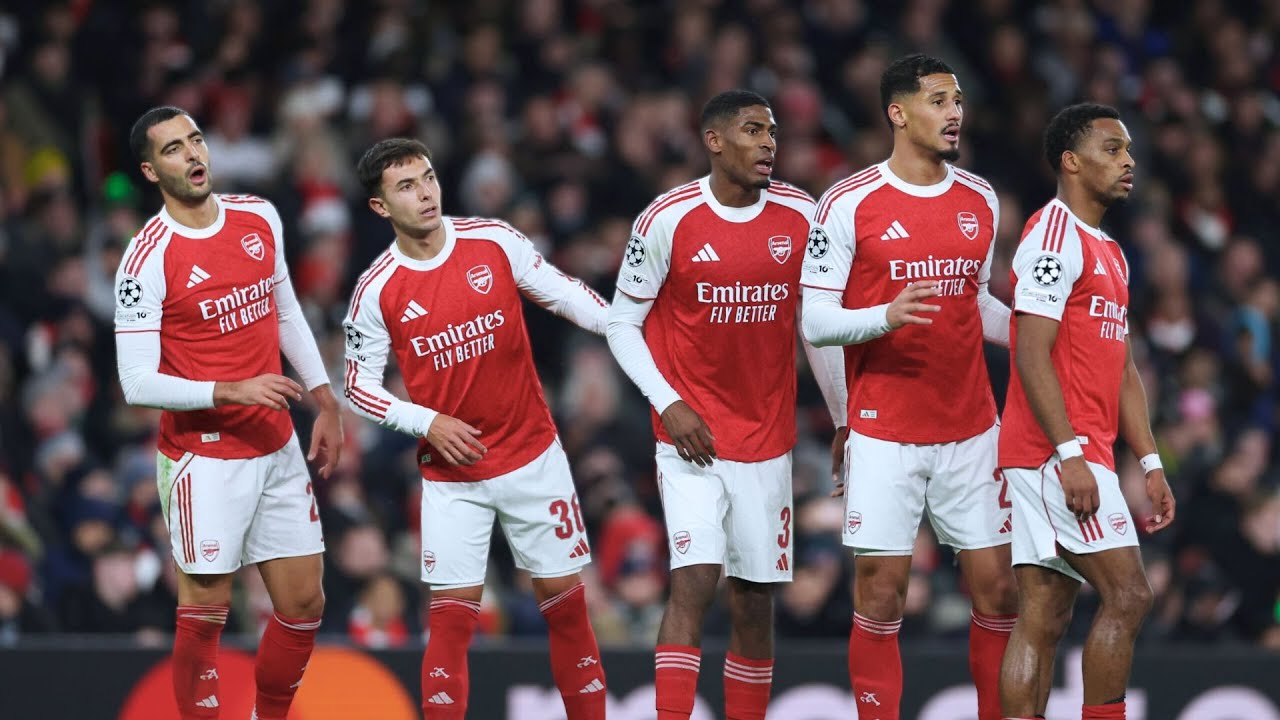
That compression changes what coaches can do to get goals in matches. Research shows approximately 30% of goals at major international tournaments come from dead ball situations, higher than in elite club leagues.
With limited time to build fluid attacking patterns, set pieces become the most reliable, coachable route to goal with the least risk of conceding.
The consequence of this means defenders become genuine attacking threats. Tall, physical centre-backs become dangerous weapons from corners and free kicks in a way they are not for most clubs. Could we see a defender emerge as one of this tournament's leading scorers?
The conditions for it are right, as club football becomes more set piece reliant the World Cup is likely to follow suit and become even more set-piece reliant.
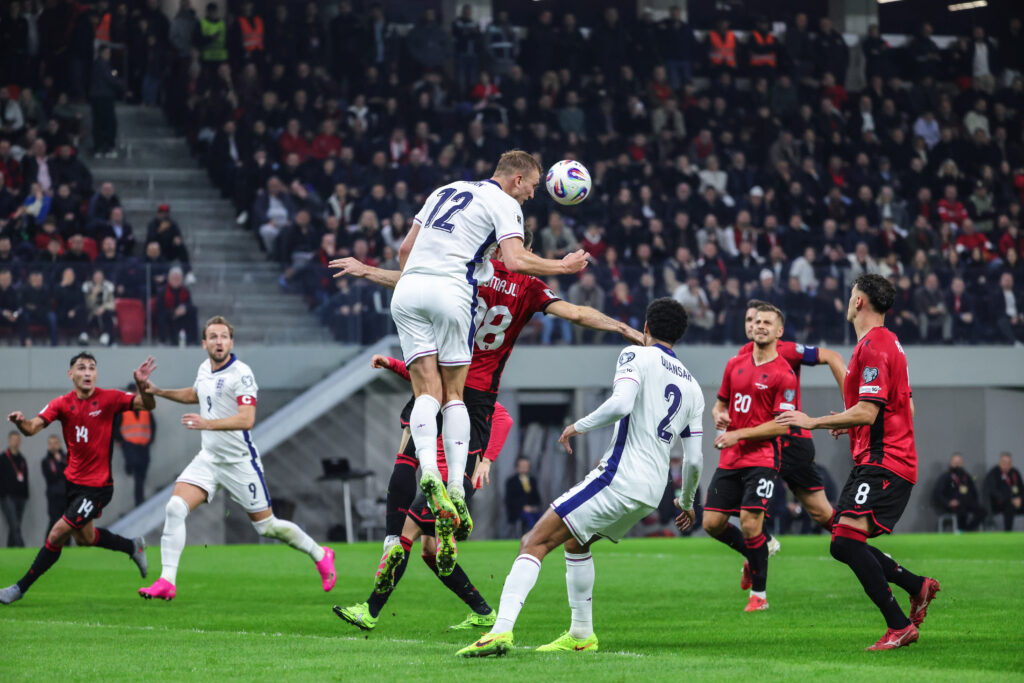
Attacking a set-piece means reading where the delivery is going before it arrives, in a mix of trained and reactive ways. These are perceptual decisions made in fractions of a second, and players who have trained the habit of building their mental picture before the moment forces a decision will be more successful at converting dead-ball deliveries.
Low Block, Mid-Block, and the Art of Organised Defending
Holding a defensive structure against sustained elite pressure for ninety minutes is one of the most cognitively demanding things a footballer can do. Morocco did not reach the semi-finals of Qatar 2022 through luck. They did it through collective intelligence that kept their defensive shape well structured across their World Cup campaign.

The most cognitively loaded role in any block is the deepest midfielder, reading when to press, when to hold, when to shift the line. These are proactive decisions, made from a continuously updated picture of the game built through frequent scanning.
What separates teams that hold their shape from those that don't is collective communication and consistent scanning, with players who signal and adjust before to mitigate dangers. That is scanning as a team habit, and it is what keeps a defensive block intact when attacking pressure arrives.
Counter-Attacking Football: Won Before It Begins
An effective counter-attack is not simply about pace. The players who make them truly devastating already know where the space is when the ball is won, because they were scanning during the defensive phase, building a picture of the pitch before their team has possession.
Professor Geir Jordet's research shows that scanning in the moments before receiving the ball is among the most predictive behaviours for goal-creating opportunities. Players who arrive at that window with an existing picture act faster. Everyone else is starting from scratch.
Japan's victories over Germany and Spain at Qatar 2022 were built on this principle. Counter-attacking football rewards players who scan during defensive phases, not just attacking ones.
Big Teams vs Small Teams: When Possession Meets Its Limits
The World Cup is the only competition where elite heavyweights regularly face well-organised lower-ranked nations in competitive games. The team that possesses the ball the most is expected to win. But sometimes, they don't.
Possession football assumes space will open eventually. A deep block can deny the familiar triggers that possession players are trained to act on. At club level, decisions are automatic because the picture is familiar. In a high-stakes international game, that picture can be denied to them.
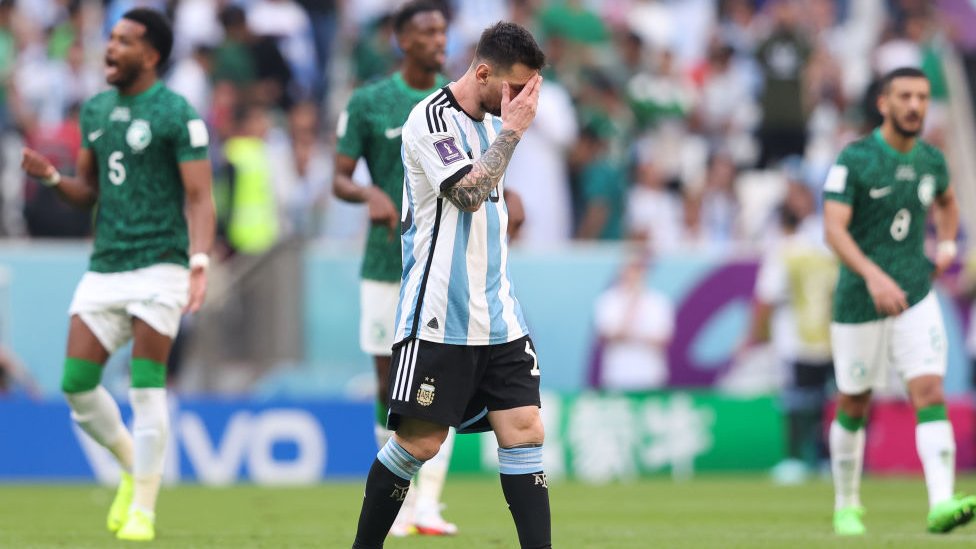
The upset pattern follows the same logic every time. In 2022 this was seen in Saudi Arabia vs Argentina, Japan vs Spain, and South Korea vs Germany. A defensively disciplined team absorbs pressure long enough that the favoured side starts forcing play. A forced decision is often a bad one and gives space for the opposition to exploit.
It only takes one mistake to see a major nation knocked out of the World Cup.
The Slower Pace, and Why It Catches Players Out
International football is measurably less press-intensive than elite club football. There is more space in the middle third, more time, and players often describe it as a slower game.
That extra time on the ball is not automatically an advantage. At club level, pressure is a trigger: the press arriving is what prompts a player to act. Remove that trigger and players whose decisions are cue-dependent find themselves waiting, holding the ball too long, and stagnating ball progression.
The players who thrive despite this scan continuously, regardless of whether pressure is coming. They don't wait for the press. They already know what to do and they respond to the picture of the game they have been able to form. They find an angle of attack by gathering enough information to spot even the smallest of weaknesses in a structured defence.
What are the Unique Demands of this World Cup?
The tactical demands above all become harder under the conditions a World Cup in North America imposes.
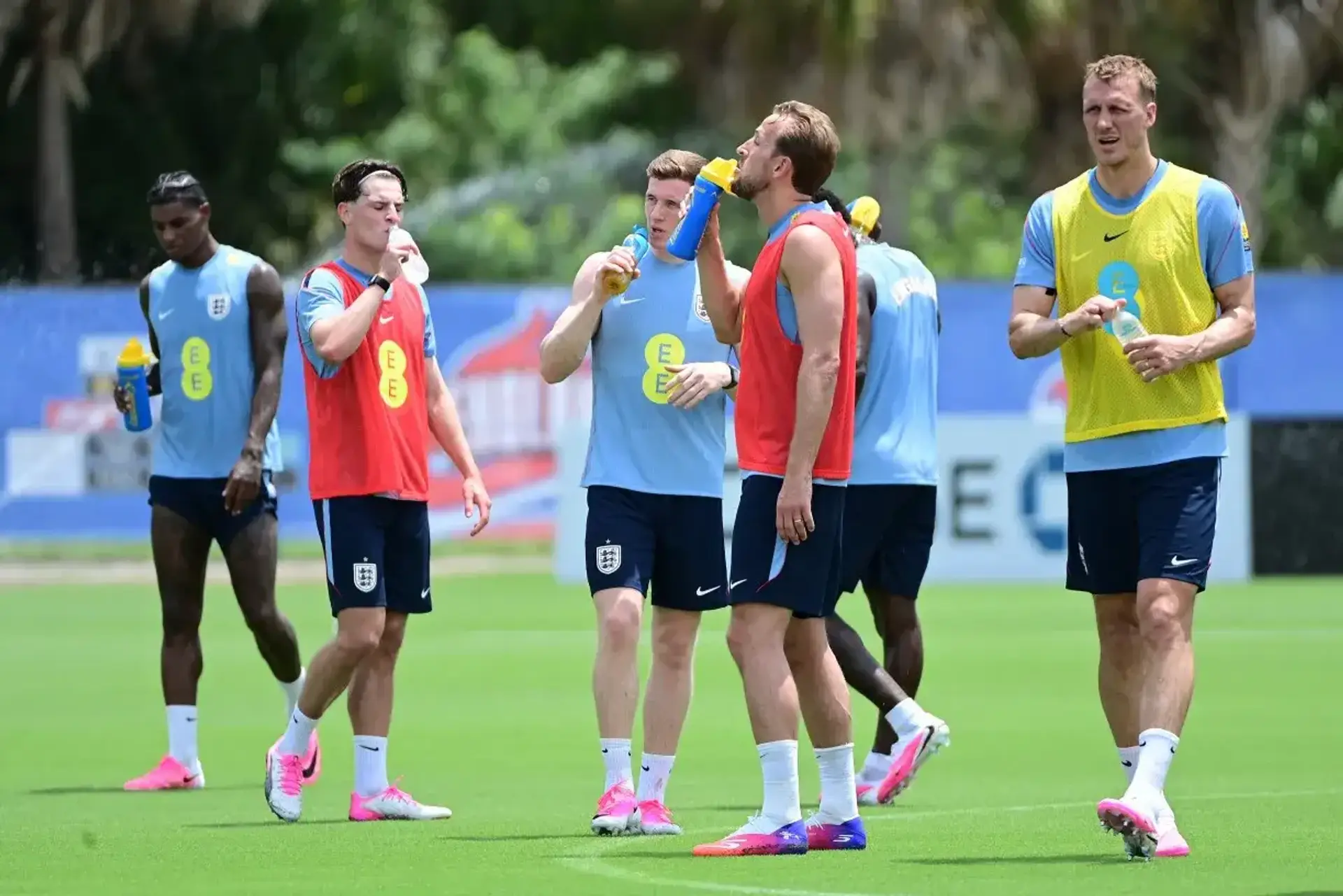
Away from home for six weeks:
Disrupted routine creates a cognitive load that reduces mental bandwidth. Managing the camp environment intelligently is all about protecting performance.
Mental pressure unlike club football:
There is no recovery from a bad run of form. Jordet's research shows psychological safety within a squad correlates directly with individual scanning frequency in matches. Team culture is a measurable performance variable.
Accumulated fatigue:
Cognitive fatigue mirrors physical fatigue. Scanning frequency and decision speed drop as tiredness builds. Teams that manage load through the group stage arrive at the finals with more mental bandwidth than those that burned through it early.
The extreme heat:
14 of the 16 host stadiums will experience more extreme heat days during the tournament than when North America last hosted the World Cup, with cities like Miami, Houston, Guadalajara, and Mexico City expected to experience 10+ extreme heat days. This adds to the physical and psychological load that players have to deal with.
What the World Cup Teaches Us About Football Intelligence
The World Cup compresses every high-level demand of elite football into a short, brutal examination of national football teams.
One moment at a set piece decides knockout ties. Effective defences eliminate favourites. Counter-attacks punish high-possession sides. And all of it happens inside conditions that erode the mental sharpness that good decisions require.
The nations that succeed are the ones whose football intelligence lasts when the conditions are at their worst. And that intelligence is not a born talent. It is a habit, and like any habit, it can be trained.
FAQs
Why do big teams lose at the World Cup?
Organised defensive blocks remove the familiar triggers that possession players are trained to act on. When the expected picture never arrives, elite players force decisions and one forced decision is enough to end a tournament.
Does the World Cup require different skills than club football?
The skills are the same but the conditions are harder and with bigger stakes. Squads have days to prepare rather than months, and there is no recovery from a bad run of form in a knockout format.
Why do so many World Cup goals come from set pieces?
With limited time to build fluid attacking patterns, set pieces are the most reliable route to goal a coaching staff can install quickly. Research puts roughly 30% of goals at major international tournaments as coming from dead ball situations, higher than in elite club leagues.
How does fatigue affect decision-making at a tournament?
Cognitive fatigue follows the same curve as physical fatigue. Scanning frequency and decision speed drop as tiredness builds, and heat accelerates that process. Teams that manage load through the group stage arrive at the knockouts sharper than those that burned through it early.
Can football intelligence be trained for high-pressure tournament conditions?
Yes. Scanning frequency, decision speed, and pre-reception awareness are trainable habits, not fixed talents. Repeated exposure to realistic, high-pressure scenarios builds the neural pathways that keep those habits intact when the conditions are at their worst.
.jpg)
.jpg)


